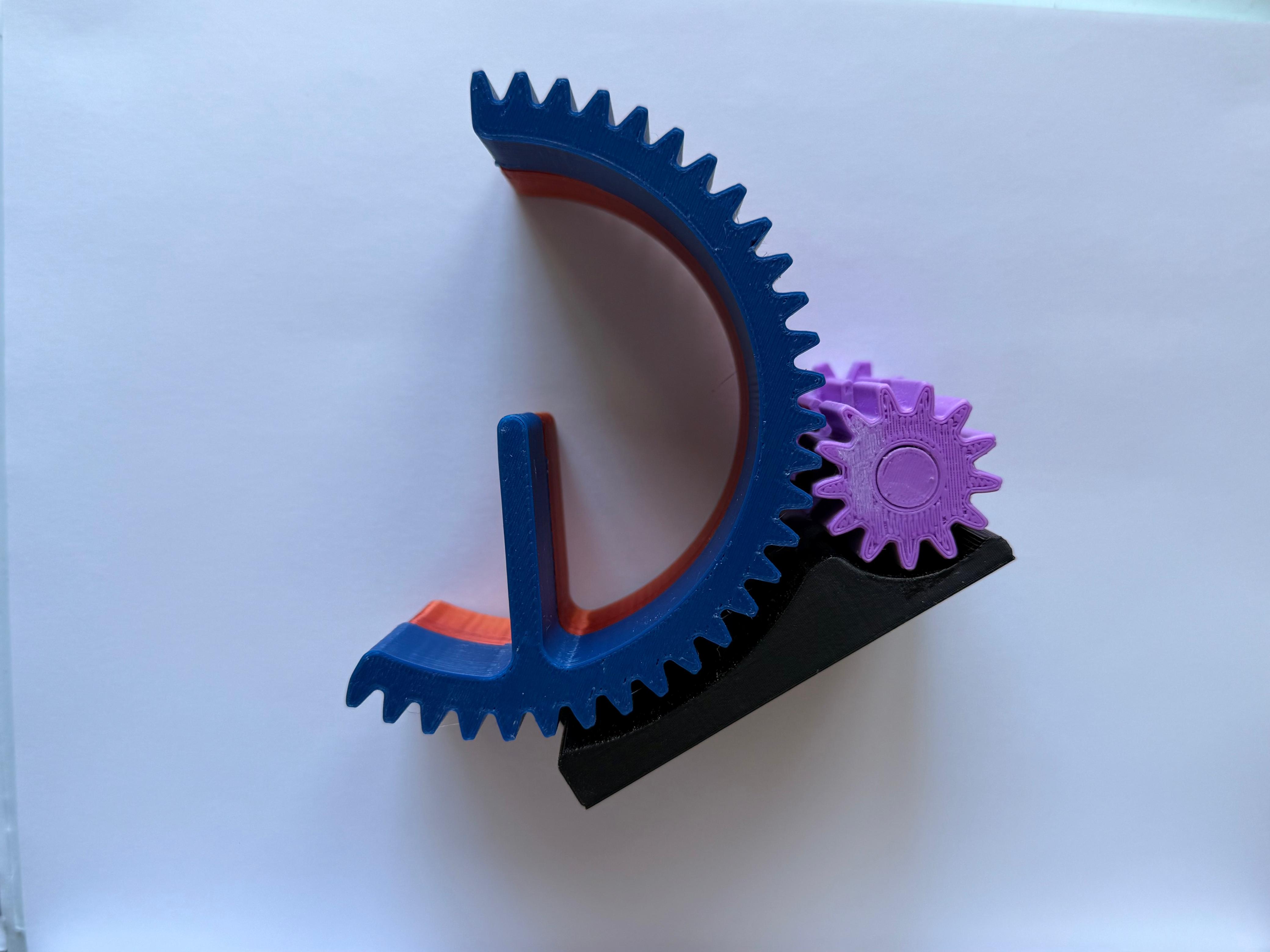
Design Project #2 — Adjustable Phone Stand
A remix-based design project that transforms a fixed-angle phone stand into a gear-driven, adjustable tool for everyday desk use.
Project Goal
Design Project #2 — Adjustable Phone Stand
Part 1: Design Research & Planning
Object Selection & Identified Annoyance
I chose my phone, an object I use daily for studying, watching videos, and participating in video calls. A repeated annoyance I experience is that most phone stands are fixed-angle. This forces me to constantly reposition the stand or stack objects underneath it in order to change the viewing angle.
What the Object Accomplishes
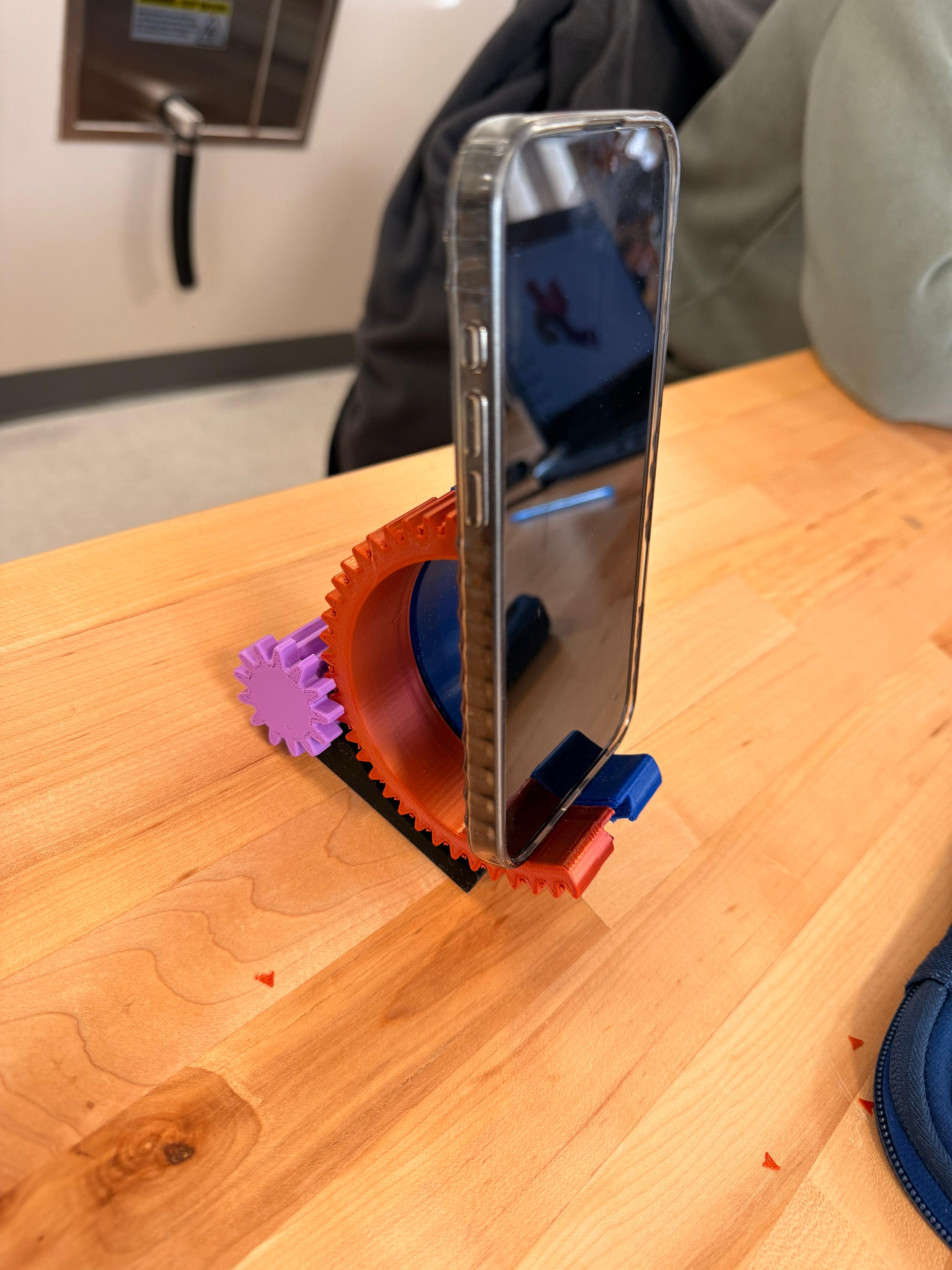
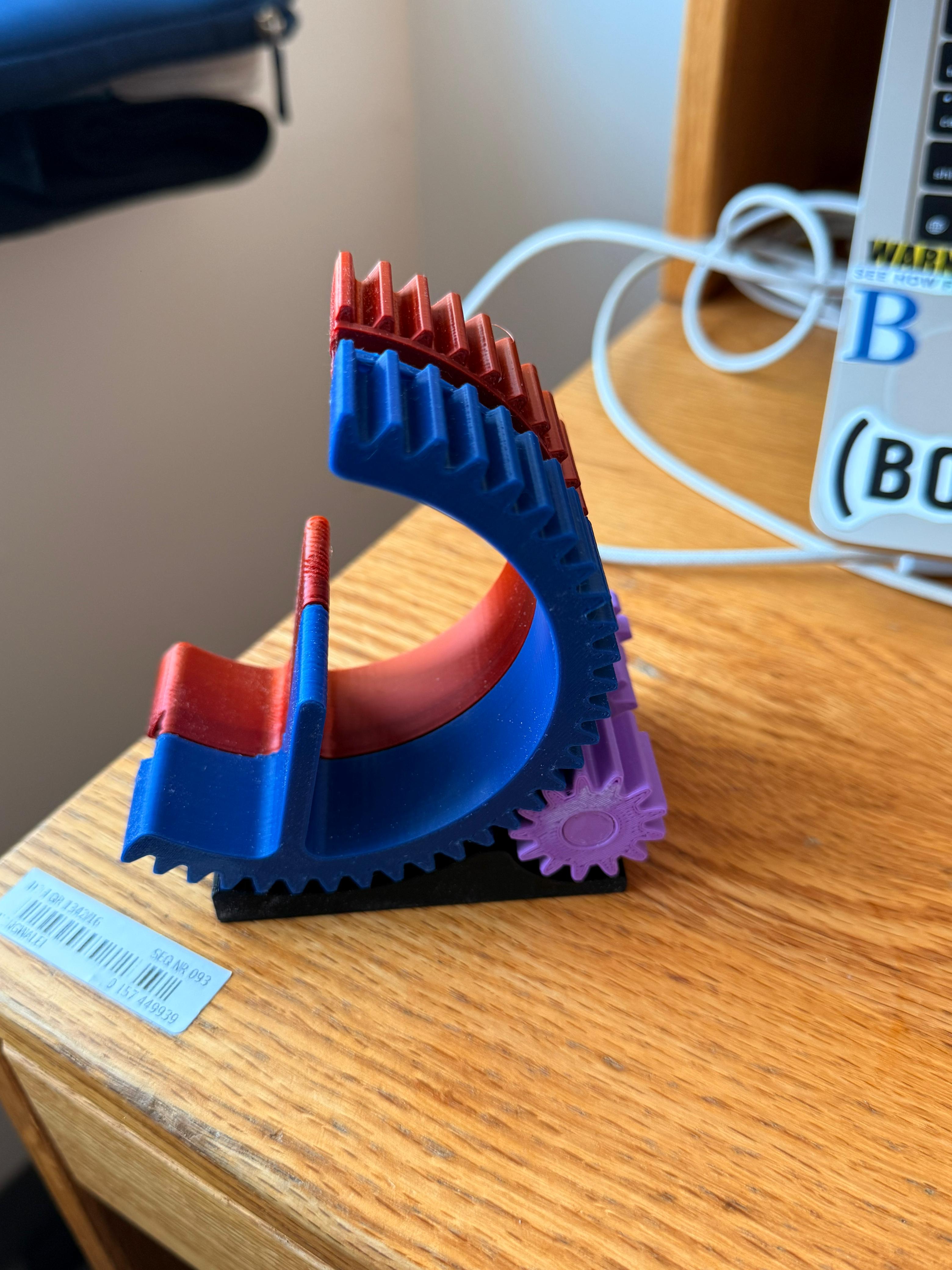
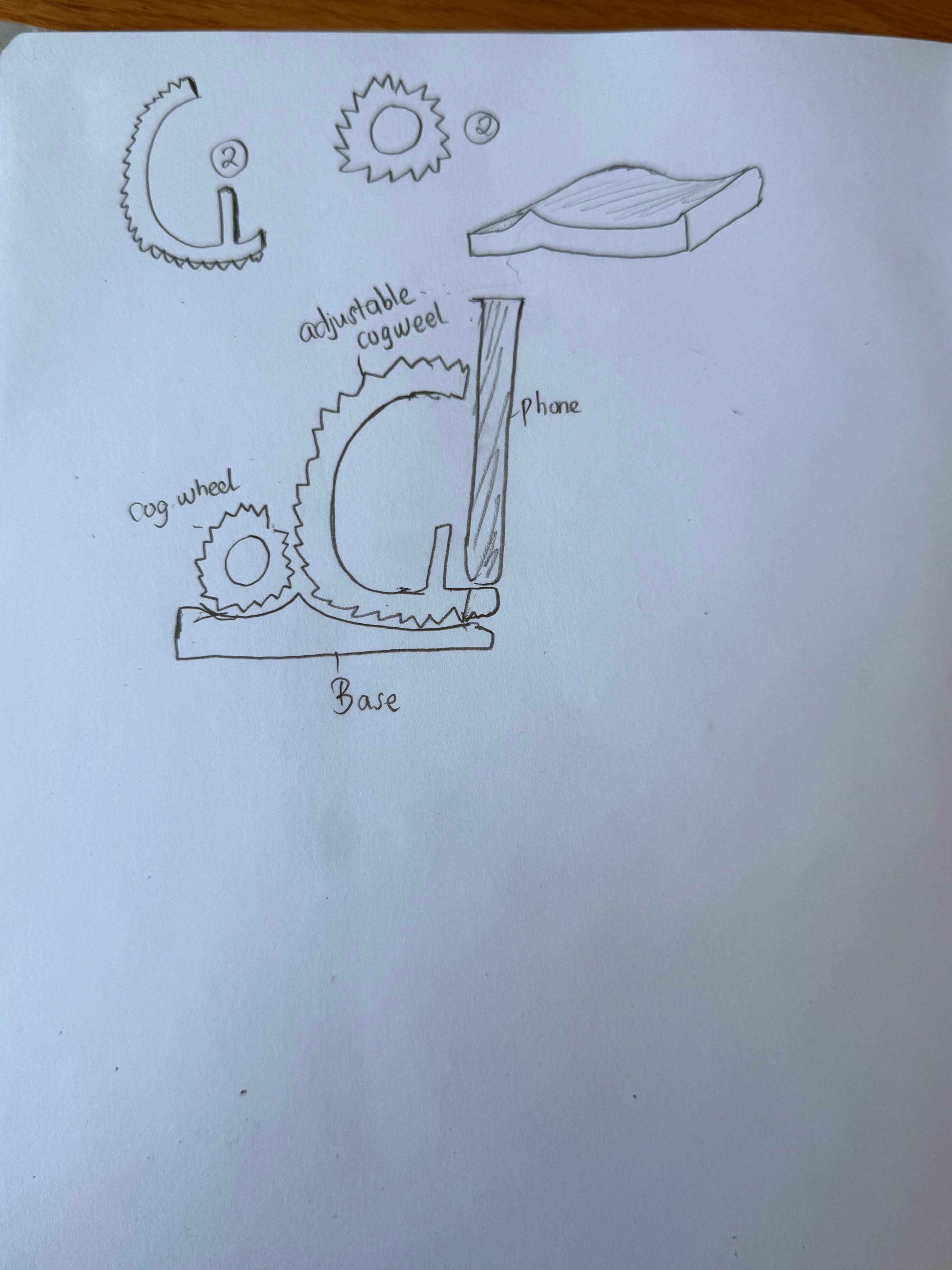
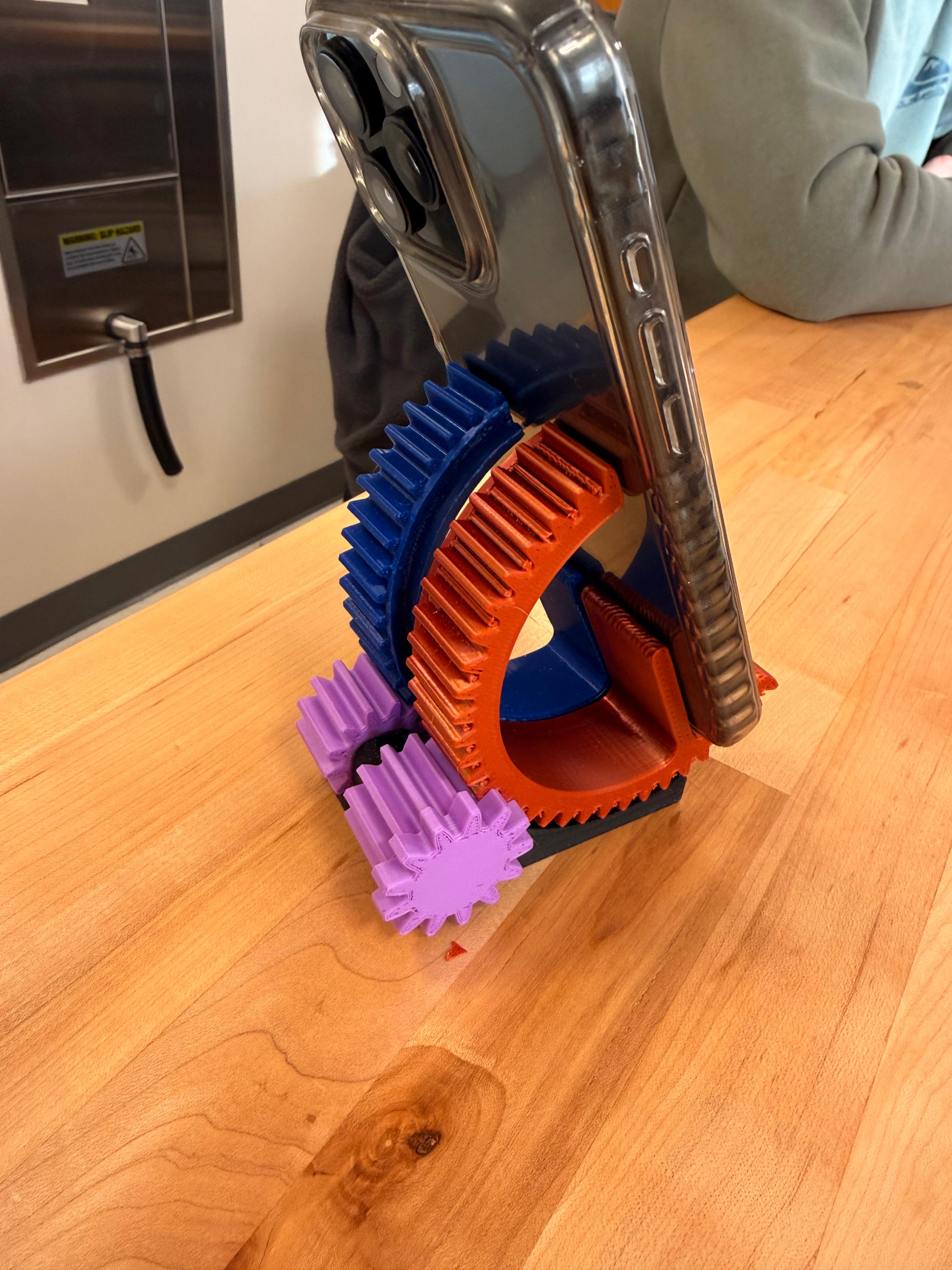
The object provides a stable, adjustable phone stand that allows the viewing angle to be changed without removing the phone. This adjustment is achieved using a mechanical cogwheel system.
How It Fits into Everyday Life
The stand is designed to sit permanently on a desk and enables quick, one-handed angle adjustments during everyday activities such as studying, watching videos, or video calls.
What It Offers That Didn’t Exist Before
- Mechanical angle locking using gears
- Discrete, repeatable angle positions
- Greater long-term reliability compared to friction-based hinges
Systematic Inventive Thinking Pattern
This design uses the Attribute Dependency pattern. The phone’s viewing angle is directly dependent on the rotation of the cogwheel mechanism, creating a clear relationship between user input and functional outcome.
Project Goals Addressed
- Saves time
- Makes repeated actions more automatic
- Improves user comfort
Print Constraints & How They Were Addressed
- Footprint: Palm-sized and compatible with a Prusa MINI+
- Printability: No supports required
- Material: PLA only
- Real-use requirement: Tested using my actual phone
Part 2: Tinkercad Remix
Public Models Remixed
The design remixes two public STL models:
- A basic phone stand STL
- A cogwheel / gear STL
Both models were imported into Tinkercad as locked mesh files.
Combining Multiple STL Files
I aligned, scaled, and merged the imported STL files in Tinkercad, using boolean operations to integrate the cogwheel mechanism into the phone stand structure.
Mesh Decimation
Yes, some STL files were overly complex. I used MeshLab to decimate the mesh, reducing the polygon count to improve performance and make the models easier to edit.
PLA Print Feasibility
The design prints reliably in PLA because overhangs are minimal, the gear teeth are self-supporting, and mechanical stress is distributed across curved surfaces.
PrusaSlicer Settings
- Material: PLA
- Layer height: 0.2 mm
- Infill: 15–20%
- Perimeters: 3
Part 3: OnShape Remix
Issues Identified After First Print
- Gear engagement tolerance
- Smoothness of rotation
- Overall geometry consistency
Improvements Enabled by OnShape
OnShape allowed me to use parametric modeling, precisely control dimensions and clearances, and improve both mechanical fit and overall aesthetics.
Benefits of Parametric Modeling
Parametric modeling made it possible to adjust dimensions without breaking the design, enabling faster iteration and more accurate refinement.
Part 4: Reflection & Evaluation
Goal Achievement
Yes. The final design enables quick, stable, adjustable phone positioning and removes the need for constant manual repositioning.
Future Optimization Opportunities
- Add textured or rubberized base features
- Create finer gear increments
- Add phone-width adjustability
Planned Future Changes
- Refine gear tooth geometry
- Experiment with different infill patterns
- Improve aesthetics with smoother transitions
Tinkercad vs. OnShape
Tinkercad
- Pros: Easy to learn and effective for remixing STL files
- Cons: Limited precision and parametric control
OnShape
- Pros: Precise, parametric and scalable design workflow
- Cons: Steeper learning curve
Final Reflection
This project demonstrated how mechanical systems such as gears can meaningfully improve everyday objects. Learning the full workflow—from sketching and STL remixing to mesh decimation, parametric CAD, slicing, and printing—gave me confidence in transforming public designs into functional, user-centered products.
Future improvements:
- Add a textured or rubberized base
- Create finer gear increments for more angle choices
- Add phone-width adjustability
- Refine gear tooth geometry for smoother motion
Gallery
Quick Facts
Object: Phone stand
Main upgrade: Gear-based adjustment
SIT Pattern: Attribute Dependency
Tools: Tinkercad, MeshLab, OnShape
Material: PLA
Supports: None
What I Learned
• Remixing locked STL files is possible, but mesh complexity matters
• Decimation makes editing faster without destroying the shape
• Parametric CAD makes iteration cleaner and more precise
Why It Matters
This was a real example of turning a daily annoyance into a practical upgrade — and using engineering design tools to make the improvement repeatable and printable.